how to get cited by ai search engineshow do i get cited by google's ai overviewsanswer engine optimization google
How to Get Your B2B SaaS Site Cited by AI Search Engines and Google AI Overviews
A practical, engine-by-engine guide to getting your B2B SaaS site cited by ChatGPT, Perplexity, Google AI Overviews, and Gemini. Verified tactics, no guesswork.
Request a quote and our experts will contact you within 24 hours with tailored solutions and pricing.
How to Get Your B2B SaaS Site Cited by AI Search Engines and Google AI Overviews
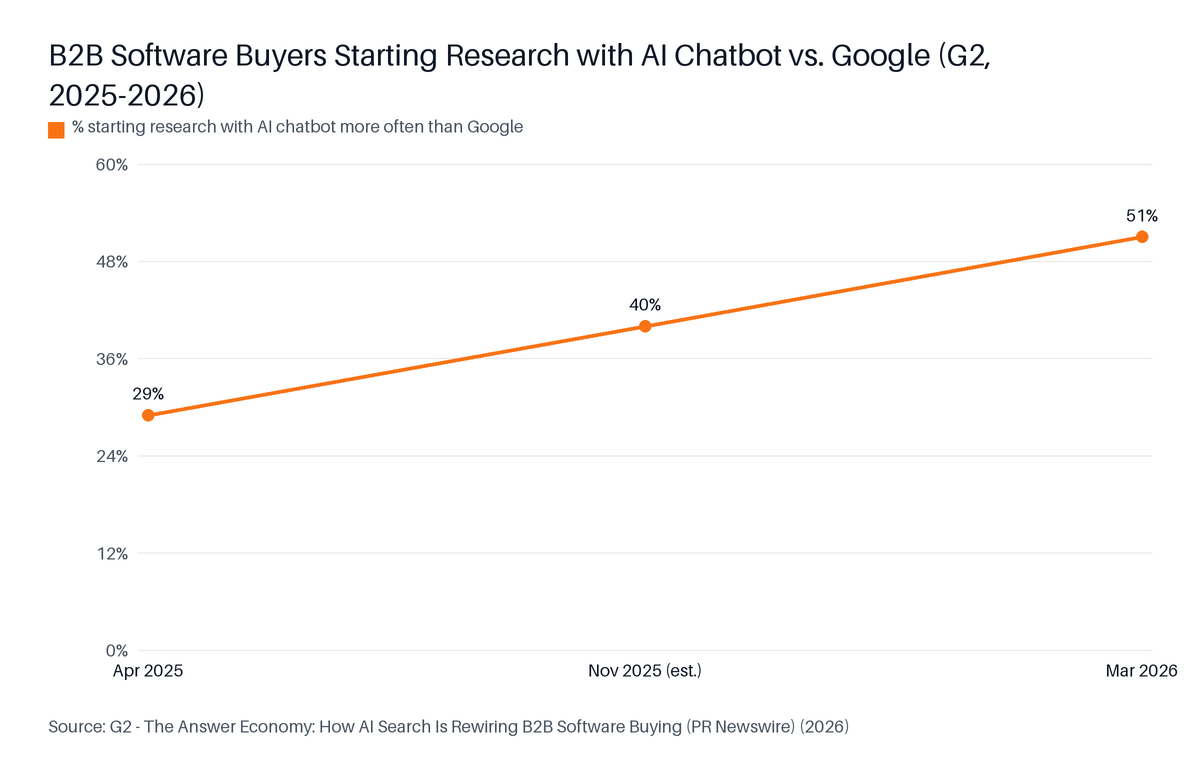
Getting cited by AI search engines means structuring your B2B SaaS site so that ChatGPT, Perplexity, Gemini, Claude, and Google AI Overviews select it as a source when a buyer asks a category or vendor question. According to a G2 survey of 1,076 B2B decision-makers in March 2026, 51% of B2B software buyers now start their research with an AI chatbot rather than Google, up from 29% just 11 months earlier (G2 via PR Newswire, 2026).
If your competitor appears in those answers and you do not, you are absent from the shortlist before a single sales conversation happens. The same G2 survey found 69% of buyers chose a different vendor than they initially planned based on AI guidance, and 33% bought from a vendor they had never previously heard of (G2 via PR Newswire, 2026).
This guide covers how answer engine optimization (AEO) works in practice: what each major engine has publicly documented about its citation behavior, what your pages and site need to qualify, and how to measure whether it is working.
Key Takeaways
51% of B2B software buyers now start software research with an AI chatbot, making AI citation a primary B2B SaaS discovery channel (G2, March 2026 survey of 1,076 decision-makers).
Brands cited inside Google AI Overviews earn 120% more organic clicks per impression than non-cited competitors; non-cited brands saw click-through rates drop 67% over 2025 (Seer Interactive, 2026).
Pages with semantically independent sections are cited 65% more often by AI engines (Clairon.ai, July 2025).
Brand mentions in third-party publications correlate with AI citation probability at 0.664, versus only 0.218 for backlinks (Ahrefs, 2025 study across 1,000 domains).
No single change guarantees a citation; citation is earned through answer quality and technical accessibility combined.
Line chart: B2B Software Buyers Starting Research with AI Chatbot vs. Google (G2, 2025–2026). Highest: Mar 2026 at 51%.
Companies get cited by AI search engines by meeting three documented conditions: pages are technically accessible to AI crawlers, content answers the buyer's question directly in the opening passage, and the brand has earned mentions in third-party publications that AI engines treat as authority signals. When a Google AI Overview is present, users click a traditional organic result only 8% of the time versus 15% without one, a 47% relative drop (Pew Research Center, behavioral study of 68,879 Google searches, July 2025), making the citation itself the primary visibility event.
Flat vector of a B2B SaaS content page emitting citation signals toward four AI engine icons
The business case for earning citations is measurable. The table below summarises documented citation behavior across the four platforms with the largest B2B AI referral share.
Engine
Documented citation behavior
Source and date
Key B2B SaaS implication
ChatGPT
74.6% of product-query citations go to vendor websites
Otterly.AI / Data-Mania, Feb 2026
Own your product and comparison pages
Perplexity
Averages 21.87 citations per response, highest of any major platform
Leapd.ai, 2026
More slots per response means higher citation opportunity
Google AI Overviews
31% of citations now come from pages outside top-100 organic results
Multi-engine coverage is now necessary, not optional
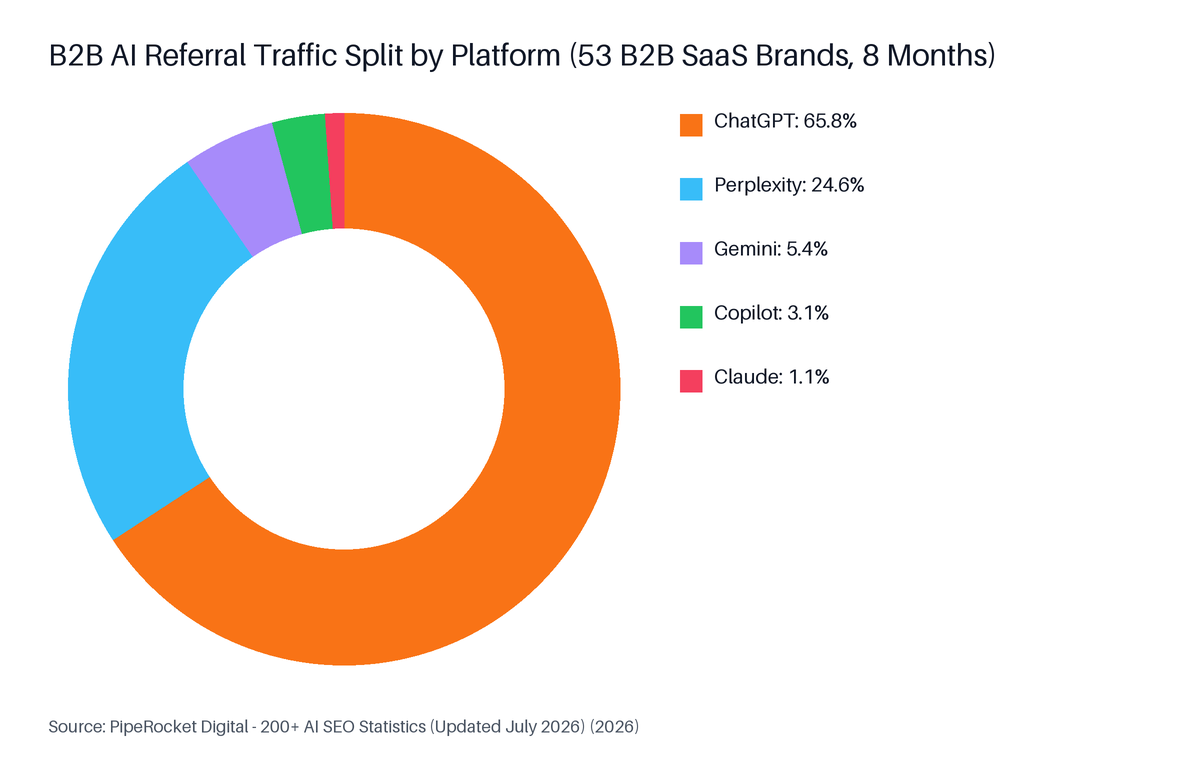
Across 53 B2B SaaS brands over eight months, ChatGPT accounted for 65.8% of AI referral traffic, Perplexity for 24.6%, Gemini for 5.4%, Copilot for 3.1%, and Claude for 1.1% (PipeRocket Digital, July 2026).
Donut chart: B2B AI Referral Traffic Split by Platform (53 B2B SaaS Brands, 8 Months). Highest: ChatGPT at 65.8%.
ChatGPT's share of measurable B2B AI referrals fell from 89.1% to 62.6% between mid-2025 and early 2026, while Claude and Perplexity grew significantly (Higoodie 2026 AI Search Traffic Report, 2026). Optimizing for a single engine is no longer sufficient. The distribution of where buyers get AI-assisted answers has spread across at least four platforms in under a year.
How to Get Your Business Cited by AI Search?
Getting a B2B SaaS business cited by AI search requires combining on-page content structure, technical site accessibility, and off-site brand presence into a repeatable process. The citation dividend is concrete: brands cited inside Google AI Overviews earn 120% more organic clicks per impression than non-cited competitors, while non-cited brands saw click-through rates (CTR) decline 67% over 2025, according to Seer Interactive's 2026 longitudinal study (Visible Authority, 2026). On ChatGPT, 74.6% of product-query citations go directly to vendor websites (Data-Mania / Otterly.AI, February 2026). Perplexity averages 21.87 citations per response (Leapd.ai, 2026). And as of March 2026, 31% of Google AI Overview citations came from pages outside the top 100 organic results (Visilay, 2026).
Flat vector comparing citation dividend for cited versus non-cited brands in AI search
That 9x conversion differential makes AI citation particularly valuable for B2B SaaS companies with long sales cycles. A buyer arriving already informed is further along than one who clicks from a generic organic result.
The practical path to citation runs through four documented steps, covered in order below.
What to Check Before You Begin
Before optimizing for AI citation, a B2B SaaS site needs four baselines confirmed: AI crawlers are permitted in robots.txt, key pages render in raw HTML without JavaScript execution, the site has an XML sitemap submitted to major search engines, and at least one category question per major buyer intent has a dedicated page with a direct opening answer. When a Google AI Overview is present, users click a traditional organic result only 8% of the time versus 15% without one (Pew Research Center, behavioral study of 68,879 Google searches, July 2025), which means a page not cited is largely invisible on those queries.
Pre-optimization checklist
Verify each of these before making content changes:
robots.txt: Confirm that major AI crawlers (GPTBot, ClaudeBot, PerplexityBot, Google-Extended) are not blocked. If a page is already public and indexed, blocking AI crawlers reduces citation opportunity with no corresponding benefit.
JavaScript rendering: Load a key landing page with JavaScript disabled. If the main content disappears, AI crawlers likely see the same empty shell. Key pages must render their content in raw HTML.
XML sitemap: Confirm the sitemap is live and submitted. Freshness signals and sitemap accuracy affect how often pages are re-crawled and re-evaluated for citation.
llms.txt: llms.txt is a proposed convention, not a standard adopted by any major AI engine as of October 2026, that signals to AI crawlers which content is intended for ingestion. Its effect is not confirmed in published engine documentation, but implementing it carries no documented downside.
Baseline question set: Select 20 or more category buyer questions and check each across ChatGPT, Perplexity, Gemini, Claude, and Google AI Overviews before making changes. This measurement baseline, proposed by GrowthSpree blog (2026), is the benchmark against which you track progress.
Step 1: Write Every Page as a Direct Answer
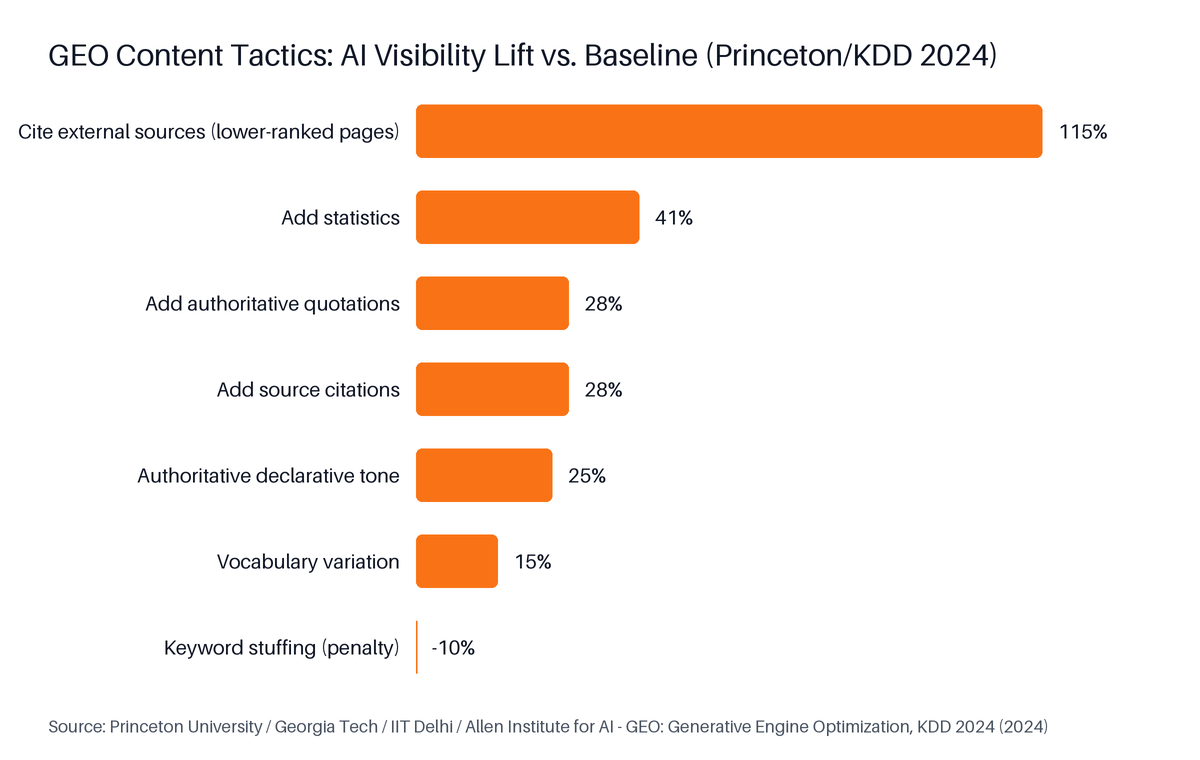
Writing pages as direct answers means opening every section with a complete, self-contained response to its heading before adding context, examples, or qualifications. Pages with semantically independent sections, where each passage makes sense without surrounding context, are cited 65% more frequently by AI engines, according to a July 2025 citation frequency analysis by Clairon.ai across major AI platforms. Adding statistics lifts AI visibility by up to 41%, and adding authoritative quotations lifts it by 28%, based on a controlled experiment at ACM KDD 2024 by researchers at Princeton University, Georgia Tech, IIT Delhi, and the Allen Institute for AI (GEO research via Omnibound, 2024).
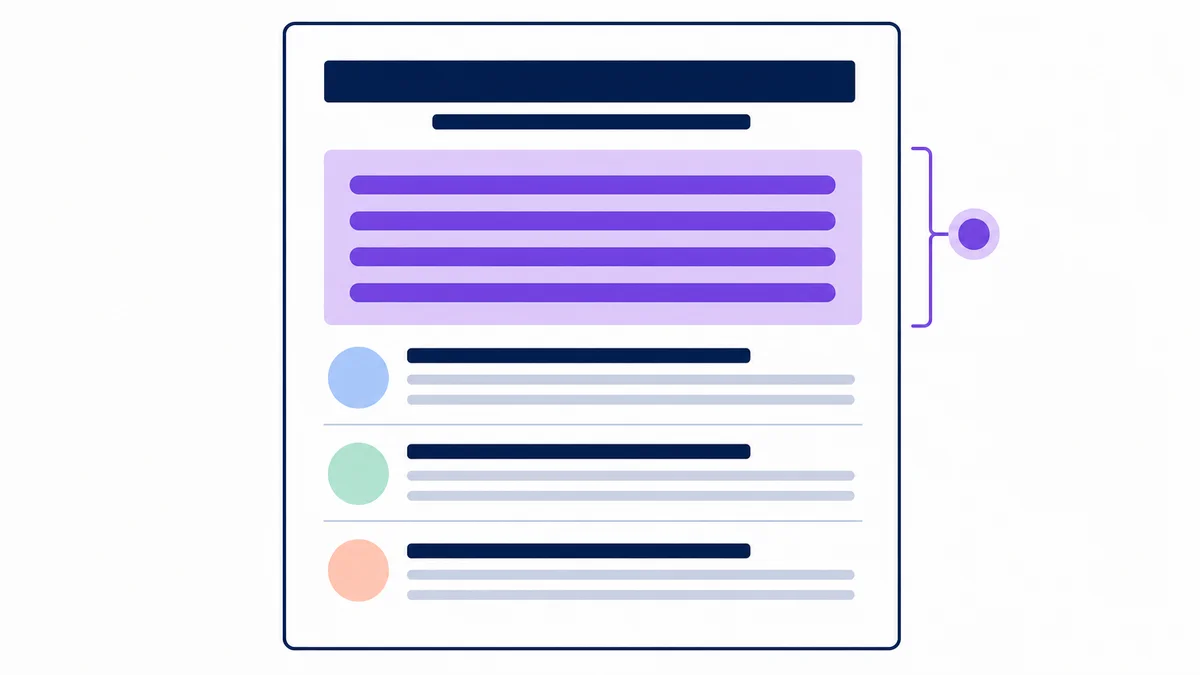
Flat vector diagram of a B2B SaaS page with answer-first structure and semantic section blocks
The structural principle is called answer-first writing. The heading names the question exactly as the buyer would ask it. The first paragraph answers it completely. Everything after adds evidence, nuance, and examples. An AI engine lifting a single passage still gets a usable answer.
What the Princeton GEO study says about content tactics
That controlled experiment tested which content changes most improved visibility in AI-generated responses, across a 10,000-query benchmark spanning 9 datasets, 25 domains, and 10 AI search engines. Generative engine optimization (GEO) is the term that research uses for this discipline.
The practical implication for a B2B SaaS page: include at least one cited statistic per major section, use direct quotations from credible sources, and avoid repeating the primary keyword beyond natural usage.
B2B SaaS page types that earn citations
Not every page type earns citations equally. On ChatGPT specifically, 74.6% of product-query citations go directly to vendor websites (Data-Mania / Otterly.AI, February 2026). The pages most likely to be cited for B2B SaaS category queries include:
Comparison pages: Product A vs. Product B with a structured table of differences
Alternatives pages: Best alternatives to a category leader, with criteria and trade-offs
Pricing pages: Transparent pricing with feature-tier tables
Integration pages: Which tools connect, and how
Security and compliance pages: Certifications, data residency, audit logs
Implementation pages: What onboarding looks like, timeline, effort required
Each page type maps to a specific buyer question. Write the heading as the question. Open with the answer.
Step 2: Audit Technical Accessibility for AI Crawlers
Technical accessibility for AI crawlers means serving page content in raw HTML, explicitly permitting AI crawlers in robots.txt, and ensuring schema markup matches what is visible on the page. Google's published documentation, confirmed as of September 2026, states that no special schema is required for Google AI Overview citation eligibility and that there is no particular schema.org markup that makes a page eligible (Citedify, Google AI Overviews SEO Guide 2026, 2026). Crawlability and page quality remain the primary documented selection factors.
Structured data is schema markup added to a web page so that search engines and AI engines can understand the content's structure. Google's September 2026 documentation confirms it is not required for AI Overview citation, but implementing schema types that match visible page content (FAQPage, HowTo, Article, Product) is still considered good practice for structured content processing.
Technical audit steps
Complete these in order:
Fetch a key page as Googlebot via Google Search Console's URL Inspection tool. Verify the rendered HTML contains the page's full text.
Open robots.txt and check for rules blocking GPTBot, ClaudeBot, PerplexityBot, and Google-Extended. Remove blocks on any page that is already publicly indexed.
Validate schema markup using Google's Rich Results Test. Confirm schema types match visible page content exactly.
Submit or re-submit the XML sitemap. Check that last-modified dates update when content changes.
Check page load on a mobile connection. Slow pages are crawled less frequently and score lower on quality signals.
Step 3: Build Off-Site Brand Presence Where AI Engines Look
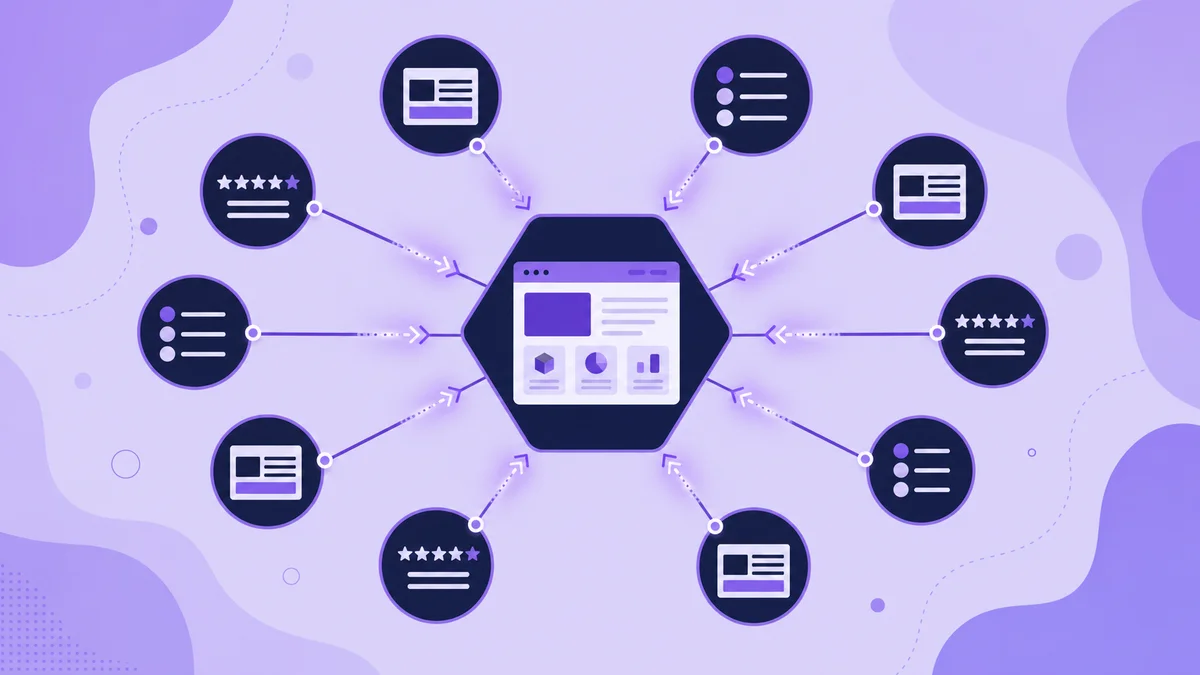
Off-site brand presence matters more than backlinks for AI citation probability. An Ahrefs correlation study across 1,000 domains found that brand mentions correlate 0.664 with AI citation probability, compared to only 0.218 for backlinks (Sunil Pratap Singh, GEO Research Summary, 2025). A December 2025 arXiv study (Zhang et al., arXiv:2512.09483) confirmed that AI engines heavily weight earned media and frequently exclude pages that exist only on vendor-owned sites (AuthorityTech, 2025).
Flat vector of third-party publication nodes linking to a central B2B SaaS vendor website node
For a B2B SaaS company, the off-site signals AI engines weight include:
Analyst and research coverage: Gartner peer insights, Forrester Wave mentions, independent benchmark reports
Third-party editorial mentions: Industry publications, independent review sites, podcast transcripts
Community discussions: Product mentions in subreddits, Stack Overflow answers, and LinkedIn articles where the brand is named in the context of solving a problem
What this means in practice
A B2B SaaS company investing only in owned content, however well-structured, faces a structural disadvantage in AI citation. The arXiv study cited above found that even high-quality pages may not be cited if they reside solely on vendor blogs. Earning mentions in independent publications, directories, and analyst content is not optional for consistent citation across platforms.
Step 4: Measure AI Citation Rate and Track Gaps Monthly
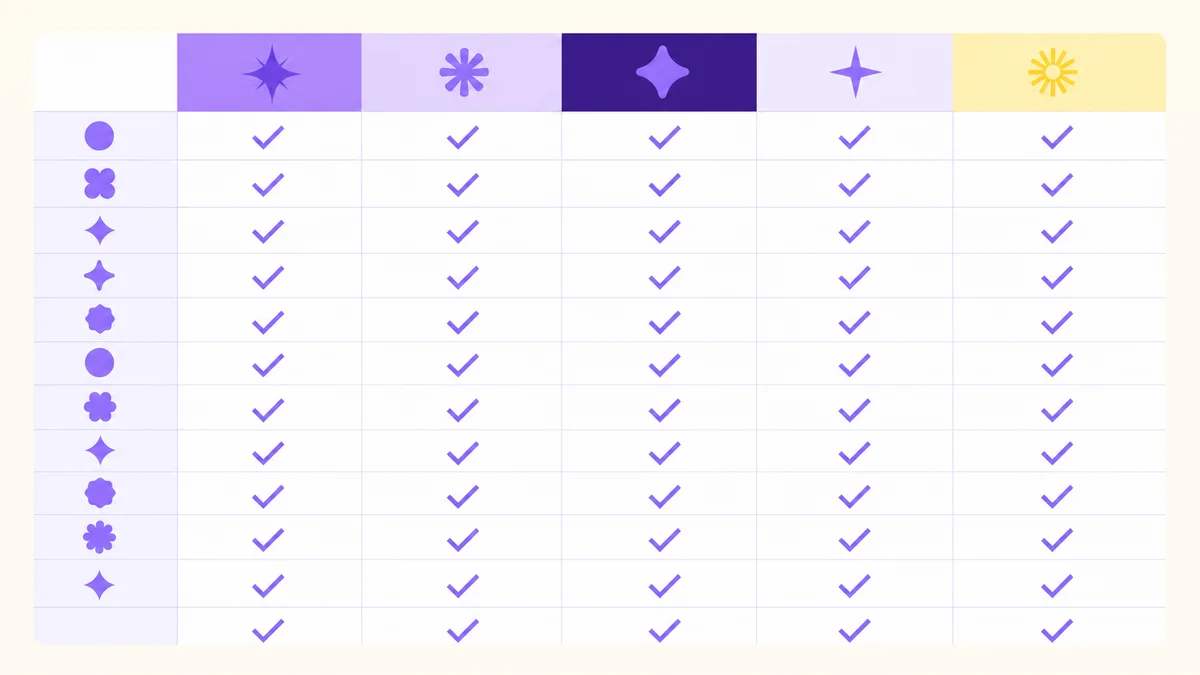
Measuring AI citation rate involves selecting 20 or more category buyer questions, checking each across ChatGPT, Perplexity, Gemini, Claude, and Google AI Overviews monthly, and recording whether the site is cited, how the product is described, and which competitors appear. AI referral traffic can be separated in standard analytics by filtering for referrer domains including chatgpt.com and perplexity.ai. This measurement cadence was proposed by GrowthSpree blog (2026) as a practical starting baseline for B2B SaaS teams with no prior AI visibility measurement.
Flat vector of a monthly audit calendar grid with five AI engine columns and checkmark shapes
Setting up the measurement baseline
Follow this cadence:
Build the question set: Write 20 or more questions a buyer would ask when researching your category. Include questions like what is your category, best tools in the category, your product versus a named competitor, and how your product handles key use cases your buyers care about.
Run each question across five engines: ChatGPT, Perplexity, Gemini, Claude, Google AI Overviews. Record the full answer and note every source cited.
Record citation rate per engine: What percentage of your 20+ questions cite your site? Which competitors appear consistently?
Check brand description accuracy: When cited, is the product described correctly? AI engines sometimes carry outdated or inaccurate descriptions from third-party sources.
Separate AI referral traffic in analytics: Filter sessions where the referrer domain includes chatgpt.com, perplexity.ai, gemini.google.com, and bing.com (for Copilot). Track this volume monthly alongside organic.
Repeat monthly: ChatGPT's share of B2B AI referrals shifted from 89.1% to 62.6% in under a year (Higoodie, 2026), so the platform distribution of where your citations appear will change. Monthly tracking catches these shifts.
Transparency note: AEO for B2B SaaS applies this checklist to its own site, including raw HTML delivery, schema, sitemap, llms.txt, and explicit crawler access. A technical report documenting the results is planned for public release.
Who This Guide Is Not For
The AEO for B2B SaaS citation guide covers B2B vendor and category research queries. It is not designed for B2C companies, e-commerce sites, or local businesses, where buyer behavior and AI citation patterns differ substantially from B2B SaaS category research. AI citation behavior on consumer product queries, local service queries, and transactional queries follows different patterns from the vendor comparison and category research queries this guide addresses.
The guide is also not for teams seeking manipulation shortcuts. No published, documented evidence supports the idea that embedding instructions to AI models inside page content increases citation probability. The engines' own published guidance focuses on content quality, page accessibility, and trust signals. Citations are earned through the quality of the answer, not through instructions addressed to the engine.
A final scope note: not every citation gap has a page-level fix. If a brand has no third-party presence in directories, analyst reports, or independent publications, structural off-site work is required before on-page changes produce consistent citation results.
Frequently Asked Questions
How do I get cited by Google's AI Overviews?
To get cited by Google AI Overviews, structure pages so the direct answer to the query appears in the first paragraph, use headings that match the exact buyer question, and serve content in raw HTML without JavaScript rendering. Google's published documentation confirms that no special schema is required for AI Overview citation eligibility, but page quality, crawlability, and topical authority all influence which sources Google selects.
How to get cited by AI answers?
Getting cited in AI-generated answers requires three things: content written as a direct, extractable answer to the buyer's question; a technically accessible page that AI crawlers can read without JavaScript; and off-site brand mentions in third-party publications. A December 2025 arXiv study (Zhang et al.) confirmed that AI engines heavily weight earned media and frequently exclude pages that exist only on vendor-owned sites.
How to get my website cited by AI?
To get a website cited by AI search engines, confirm AI crawlers are allowed in robots.txt, serve key content in raw HTML rather than JavaScript-rendered markup, add matching schema markup to each page, and open every major section with a self-contained direct answer. Brand mentions in external publications, analyst directories, and review platforms increase citation probability independently of on-page changes.
How to get cited by AI question?
To get cited for a specific buyer question, write a page where the heading is phrased as that exact question and the opening paragraph answers it completely in 40 to 80 words. Pages with semantically independent sections, where each passage makes sense without surrounding context, are cited 65% more frequently by AI engines, according to a July 2025 citation frequency analysis by Clairon.ai across major AI platforms.
How to get content cited by Google AI Overviews?
Content most likely to get cited by Google AI Overviews covers the exact query in the page heading, opens with a direct answer, and comes from a domain with established topical authority. As of March 2026, 31% of Google AI Overview citations came from pages outside the top 100 organic results (Visilay, 2026), meaning strong organic ranking is helpful but not required for citation eligibility.
How does answer engine optimization apply to Google AI Overviews specifically?
Answer engine optimization (AEO) applied to Google AI Overviews means structuring pages so the query is matched in the heading, the direct answer is in the opening paragraph, and the page is technically readable by Googlebot. Google's September 2026 documentation confirms that no special schema is required for AI Overview citation, but page quality and crawlability are the primary documented selection factors (Citedify, 2026).
How do I optimize a B2B SaaS site to appear in Google AI Overviews?
Optimizing a B2B SaaS site for Google AI Overviews involves five documented steps: phrase each page heading as the buyer's exact question; place the direct answer in the first paragraph; confirm the page is indexed and crawlable in raw HTML; build topical authority through consistent question-answering content across the category; and earn external mentions in directories, analyst sites, and independent publications that cover the category.
Conclusion
Getting cited by AI search engines is not a single tactic. It is the result of three things aligned: pages structured as direct answers, a site technically readable by AI crawlers, and a brand present in the third-party sources those engines trust.
The numbers make the case. Fifty-one percent of B2B software buyers now start research with an AI chatbot (G2, 2026). Brands cited inside Google AI Overviews earn 120% more clicks per impression than those not cited (Seer Interactive via Visible Authority, 2026). The engine landscape is shifting fast too: ChatGPT's share of B2B AI referrals fell from 89.1% to 62.6% in under a year (Higoodie, 2026), making multi-engine coverage the baseline, not an advanced step.
Start with the four steps in this guide: answer-first writing, technical crawler access, off-site brand presence, and monthly citation tracking. None require a new content budget. They require a different standard for what a page is for.
Meet with an expert. A free consultation with the AEO for B2B SaaS team. Bring the questions buyers ask about your category and brainstorm how to get cited. Book a session.